Top 10 Juventus FC Players of All Time
All-time rankings are arguments disguised as lists. The useful version is not the one that pretends certainty, but the one that makes its criteria clear and then lives with the consequences.
That matters with Juventus more than with most clubs. The Bianconeri have more than a century of elite players, several distinct golden eras, and a habit of making every debate feel larger than a simple numbers exercise. If you are trying to name the greatest Juventus players of all time, the available evidence points you toward four recurring filters: peak level, longevity, silverware, and symbolic weight inside the club’s story. Pure talent matters, of course, but at Juventus the question is usually broader than talent alone.
For readers who want wider club context before the ranking begins, Britannica’s overview of Juventus and the club’s own history section are useful starting points. If you are exploring this site more broadly, the home page and the main blog archive give the larger picture.
This ranking leans toward what players did for Juventus specifically. That is why longevity can beat a shorter peak, and why a player who stayed through difficult years may edge out a bigger global celebrity. Context matters. So does the fact that statistics from older eras are sometimes recorded differently across competitions, while the formal title record around the Calciopoli years remains unusually messy. Where exact tallies vary by source, I use rounded context and the clearer historical takeaway instead of false precision.
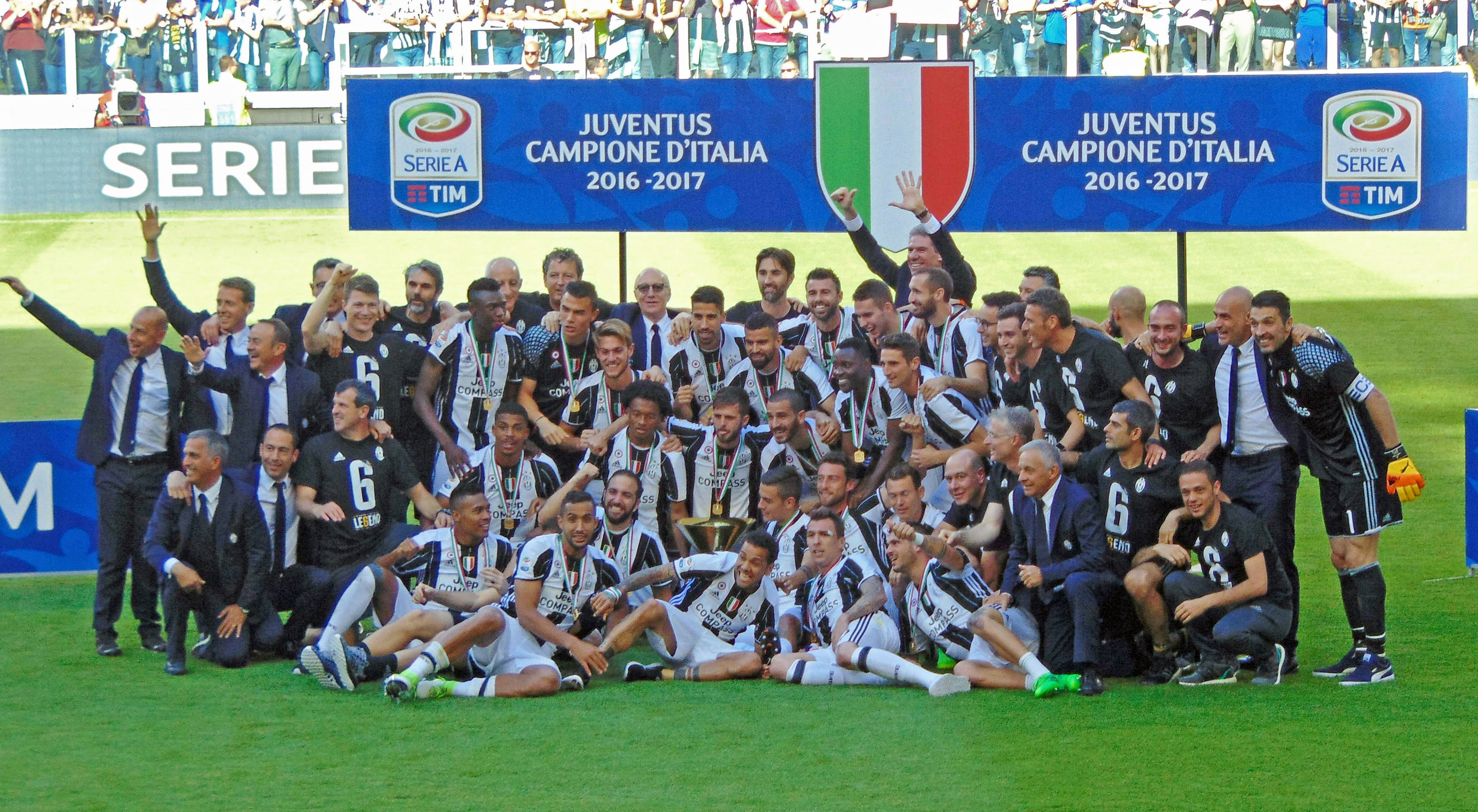
The ranking criteria in one view
- Peak performance: How dominant was the player at his best?
- Longevity: Did he shape one great season, or an entire era?
- Achievements: League titles, European runs, major individual awards, and decisive performances all matter.
- Club impact: Some players change not just results, but the way Juventus is remembered.
| Rank | Player | Juventus era | Why he belongs here |
|---|---|---|---|
| 10 | Roberto Bettega | 1970s to early 1980s | Complete forward and one of the key faces of the club before the Platini era. |
| 9 | Dino Zoff | 1970s to early 1980s | Reliability, leadership, and title-winning authority in goal. |
| 8 | Giorgio Chiellini | 2005 to 2022 | The emotional and defensive core of the modern dynasty. |
| 7 | Omar Sivori | 1957 to 1965 | A transformational attacker whose imagination changed the feel of the team. |
| 6 | Pavel Nedved | 2001 to 2009 | Intensity, range, and a Ballon d’Or season that still stands out. |
| 5 | Gianluigi Buffon | 2001 to 2018, 2019 to 2021 | The standard-setting goalkeeper of the club’s late-modern era. |
| 4 | Michel Platini | 1982 to 1987 | Shorter stay, extraordinary peak, and rare artistic control in midfield. |
| 3 | Gaetano Scirea | 1974 to 1988 | Elegant defending and deep tactical intelligence across a historic cycle. |
| 2 | Giampiero Boniperti | 1946 to 1961 | Great forward, club symbol, and later an institutional standard-bearer. |
| 1 | Alessandro Del Piero | 1993 to 2012 | Longevity, goals, loyalty, and a claim on Juventus’ emotional center. |
10. Roberto Bettega
Bettega often gets squeezed in all-time conversations because Juventus has produced so many iconic forwards, but that would be a mistake. He scored heavily, linked play elegantly, and helped anchor the team that won repeatedly in the 1970s. In simple terms, he was not just a finisher. He was a complete attacking reference point who gave Juventus technical grace without sacrificing output.
His case rests on both numbers and timing. Bettega finished with well over 170 goals for the club across all competitions, won multiple league titles, and became a defining figure before the Platini years changed the European scale of the conversation. He ranks tenth only because Juventus history is brutally crowded, not because his contribution was modest.
9. Dino Zoff
Zoff’s greatness can look deceptively quiet on the page. Goalkeepers rarely dominate nostalgia the same way scorers do, yet Juventus in the 1970s relied on him as a stabilizing force of almost absurd consistency. He brought calm, command of the penalty area, and the sort of authority that makes defenders look more composed simply by standing nearby.
At Juventus he won league titles, domestic cups, and major European honors, and his broader reputation as one of football’s greatest goalkeepers only strengthens the club case. What pushes him into the top 10 is that his excellence was not theoretical. It arrived week after week, across big domestic campaigns and in European competition, until reliability itself became part of the mythology.
8. Giorgio Chiellini
Chiellini belongs high on this list because he did two difficult things at once: he was an elite defender in purely football terms, and he became one of the clearest modern symbols of Juventus as a mentality. That second point matters. Some defenders are admired; Chiellini was inhabited by the game in a way that made every duel feel personal.
He stayed through the Calciopoli fallout, grew into a leader, and then captained the club through the era of nine consecutive league titles. More than 500 appearances, countless recovery tackles, and an extraordinary competitive edge make the statistical case. The cultural case is even stronger. When modern supporters picture Juventus resilience, Chiellini is usually in the frame.
7. Omar Sivori
Sivori’s Juventus years changed the aesthetic temperature of the team. He arrived from River Plate with flair, aggression, and improvisational brilliance, then helped form one of the most feared attacking combinations in Europe. If Boniperti gave Juventus post-war authority, Sivori gave it a sharper edge and a more dangerous imagination.
His peak was magnificent. He scored freely, won league titles, and claimed the Ballon d’Or in 1961 while wearing Juventus colors. That award does not settle the ranking by itself, but it does tell you something useful: at his best, Sivori was not merely a club star. He was one of the dominant footballers in the world.
6. Pavel Nedved
Nedved’s place here rests on a combination of endurance and force. He could carry the ball, press, cover distance, strike from range, and turn a stagnant match into something more volatile. Juventus needed exactly that sort of energy when the club entered the early 2000s transition away from one era and toward another.
The headline season remains 2002-03, when Nedved was one of Europe’s outstanding midfielders and later won the Ballon d’Or. FIFA’s interview with Alessandro Del Piero is a useful reminder of how heavily that Juventus generation still weighs on the club’s identity, and Nedved was central to it. His suspension for the 2003 Champions League final remains one of those details Juventus supporters still mention with a wince, which is another way of saying his importance was felt most clearly when he was absent.
5. Gianluigi Buffon
There are more decorated goalkeepers in club football history and there are keepers with louder highlight reels, but Buffon’s Juventus case is unusually complete. He arrived in 2001, became the face of elite reliability almost immediately, remained after relegation in 2006, and then stood behind multiple title-winning cycles as the club rebuilt itself.
More than 680 appearances tell part of the story. The rest lives in memory: huge one-on-one saves, command of space, and the sense that Juventus began major matches with a structural advantage because Buffon was there. FIFA’s profile of Buffon captures the scale of his reputation, but his club impact is even more straightforward. For two decades, Juventus almost never had to wonder whether its goalkeeper belonged at the highest level.
4. Michel Platini
Platini ranks fourth because the peak was simply too high to ignore. His Juventus stay lasted only five seasons, which is short compared with Del Piero, Boniperti, or Scirea, but those seasons were so rich in authority that they still stand near the top of the club’s entire attacking history. He could slow a game down, accelerate it with one pass, score from midfield, and decide major matches without seeming hurried by any of it.
He won three consecutive Ballon d’Or awards while at Juventus, collected domestic titles, and helped the club secure the 1985 European Cup. If this list were based only on best individual peak, he could plausibly challenge for number one. He sits fourth because Juventus history places unusual value on longevity, and a five-year spell, however brilliant, still leaves less total club imprint than the names above him.
3. Gaetano Scirea
Scirea is one of the clearest examples of why a Juventus ranking cannot rely on obvious statistics alone. He was a defender, a sweeper, a tactician in boots, and the sort of player whose influence becomes even larger when you watch how the entire shape of a team responds to him. Elegant is the word used most often, and it fits, but elegance can undersell his competitiveness. He was refined without being passive.
Across more than a decade at Juventus, Scirea won major domestic and European honors and became one of the defining defenders of his era. In a club that has often admired control, balance, and intelligence over noise, Scirea feels almost like an ideal type. Ranking him third is not generosity toward a defender; it is an acknowledgment that he embodied some of Juventus’ deepest football values.
2. Giampiero Boniperti
Boniperti’s claim is two-layered. First there is the player: an elite post-war forward, prolific scorer, and creative leader who spent his entire senior career at Juventus. Then there is the symbol: a man whose later executive role helped turn personal excellence into club culture. That second layer makes his historical footprint unusually large.
As a footballer he scored more than 180 goals for Juventus and drove the attack across an era that helped re-establish the club after the war. As an institutional figure, he became one of the clearest sources of the idea that Juventus should treat winning as a standard rather than a miracle. Very few players can influence the club once; Boniperti managed it twice.
1. Alessandro Del Piero
Del Piero finishes first because he has the broadest credible case. He brought top-level technique, decisive goals, longevity across multiple generations, and a relationship with Juventus that survived both triumph and damage. Other players had higher short peaks. A few may even have been more complete in one narrow football category. None balanced excellence, symbolic weight, and duration quite like Del Piero.
He remains Juventus’ all-time leader in appearances and goals, a point often repeated because it is difficult to improve on as an opening argument. More importantly, he became the emotional shorthand for the club’s modern story: the bright early years, the Champions League success in 1996, the setbacks that followed, the decision to stay through Serie B, and the return to status. UEFA’s look back at Alessandro Del Piero’s career helps underline how much of Juventus’ late-modern identity is tied to him. If you need one player to explain what Juventus thinks it is when the pressure rises, Del Piero is usually the answer.
What this ranking leaves out
All-time lists always exclude someone important. Juventus has strong cases for players such as Antonio Cabrini, Claudio Gentile, Marco Tardelli, John Charles, Zinedine Zidane, and even Cristiano Ronaldo if the argument weights peak quality more heavily than length of service. The reason they miss out here is not lack of greatness. It is that this ranking puts Juventus-specific contribution above pure star power.
That choice will not satisfy everyone, which is healthy. A ranking that offends nobody has probably said very little.
Final takeaway
The strongest Juventus players do more than accumulate medals. They define eras, survive pressure, and alter the club’s sense of itself. Del Piero, Boniperti, and Scirea feel especially important because each one stands at the intersection of achievement and identity. Platini represents the dazzling peak. Buffon and Chiellini represent modern authority. Sivori, Nedved, Zoff, and Bettega each capture a different version of Juventus at full force.
If you want a practical way to use this list, do not treat it as a finished verdict. Treat it as a map. Start with the top three, compare their eras, then ask which version of Juventus you value most: artistry, resilience, leadership, or longevity. That question usually reveals more than the ranking itself.