The Evolution of Juventus FC: From Formation to Modern Day
Juventus did not become a giant by accident; the club became a giant by surviving, adapting, and then insisting that success should look like a habit rather than a surprise.
When people look for the history of Juventus, they usually want a few clear answers. How did a club founded by students in Turin become the most decorated force in Italian league football? Which players and coaches turned Juventus from a local side into a global name? Why does one club keep appearing at the centre of Italy’s biggest football arguments, from tactical innovation to scandal and renewal? Those are fair questions, and they deserve more than a list of trophies.
The available historical record makes one point hard to miss: Juventus is one of the oldest and most influential clubs in Italy, with roots stretching back to 1897 and a competitive story that mirrors the growth of Italian football itself. General histories such as Britannica’s club overview capture the long arc, while reporting on turning points such as the 2006 Calciopoli punishment shows how quickly prestige can be tested. Context matters here: Juventus history is not a smooth climb, but a sequence of rises, shocks, and rebuilds.
In the rest of this guide, I will walk through the club’s formation, its defining milestones, the figures who shaped its identity, and the reasons Juventus still matters so much to Italian football. If you want a broader introduction before diving into the detail, the home page and the wider blog archive are useful next stops.
Key terms that make Juventus history easier to follow
Before getting into the chronology, it helps to define a few recurring terms:
- Serie A: Italy’s top domestic league and the competition most closely tied to Juventus’ long-term dominance.
- Scudetto: The badge and shorthand term used for the Italian league title. In practice, it is the domestic measure that frames most Juventus seasons.
- Coppa Italia: Italy’s main domestic cup competition, important because it tests squad depth and managerial flexibility.
- Calciopoli: The 2006 refereeing scandal that led to Juventus being stripped of titles and relegated to Serie B, the single biggest rupture in the club’s modern history.
- Bianconeri: The club’s long-standing nickname, drawn from the black-and-white shirts that became Juventus’ visual signature in the early twentieth century.
From Turin schoolboys to national contender
Juventus was founded in 1897 by students from Turin’s Massimo d’Azeglio high school. That detail matters because it explains the club’s early tone: youthful, local, experimental, and not yet the institution it would later become. In its earliest years Juventus did not look like the polished machine many modern viewers imagine. The club began with pink shirts, changed to black and white in 1903, and won its first Italian championship in 1905. Even at that stage, the useful takeaway is that Juventus developed quickly because it married enthusiasm with organization.
The club’s identity sharpened further after the Agnelli family’s involvement began in the 1920s. With stronger financial backing and more stable leadership, Juventus became central to the professionalization of the Italian game. The famous run of five consecutive league titles between 1930-31 and 1934-35 did more than add silverware; it established Juventus as a club expected to set the pace. Italian football was still defining its own hierarchy, and Juventus helped write it.
There is also a cultural point here. Many clubs win, a smaller number sustain, and only a handful turn success into a national habit. Juventus belongs to that last group. Its support extended well beyond Turin, partly through migration patterns, partly through television, and partly because repeated success tends to travel. Whether one admires that reach or resents it, the scale of the club’s following is part of the explanation for why Juventus stories rarely stay local for long.
A timeline of the milestones that changed the club
A long club history becomes easier to read when it is broken into turning points rather than treated as one continuous march.
| Year | Milestone | Why it matters |
|---|---|---|
| 1897 | Juventus is founded in Turin. | The club enters Italian football early enough to shape, not just join, its competitive culture. |
| 1905 | First Italian league title. | Juventus proves it can compete at the top rather than remain a promising local side. |
| 1923 | Agnelli family era begins. | Long-term ownership helps create unusual continuity in governance and ambition. |
| 1930-1935 | Five straight league titles. | The club becomes the benchmark for sustained domestic excellence in pre-war Italy. |
| 1977 | UEFA Cup triumph. | Juventus confirms that its stature is not only domestic but continental. |
| 1985 | European Cup win. | The club reaches the summit of European football, even if that night is remembered within a complex and painful wider context. |
| 1996 | Champions League title under Marcello Lippi. | The modern Juventus model of tactical clarity, elite forwards, and big-match control reaches full expression. |
| 2006 | Calciopoli relegation to Serie B. | The most severe institutional crisis in club history forces Juventus to rebuild from the ground up. |
| 2011 | New stadium opens. | The move marks a commercial and symbolic reset, as noted in The Guardian’s report on the opening. |
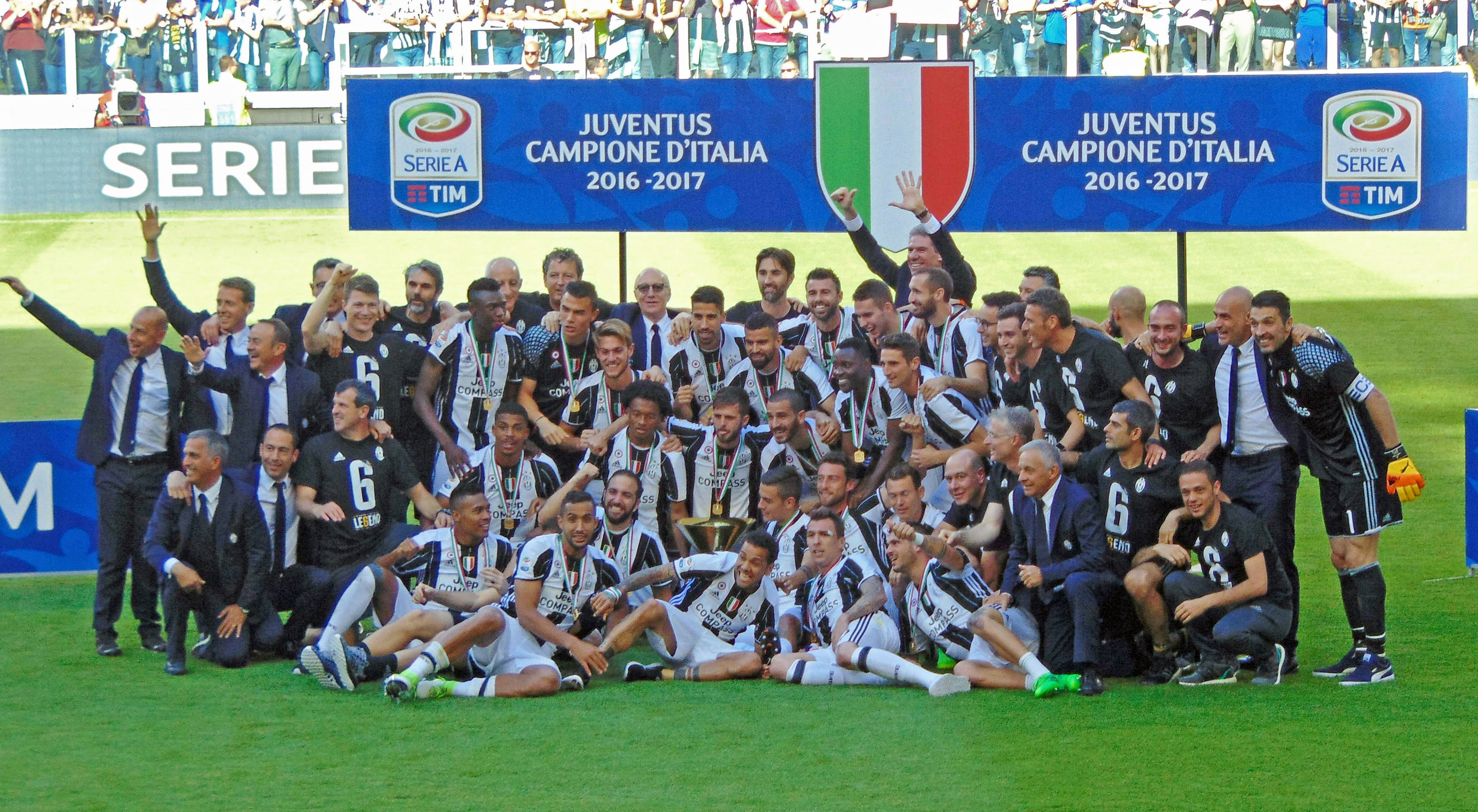
| 2012-2020 | Nine straight Serie A titles. | Juventus turns recovery into a new dynasty and reasserts domestic control. |
If I had to reduce that table to one theme, it would be this: Juventus history is not just a trophy count, but a sequence of institutional resets. The club repeatedly found ways to modernize itself without fully abandoning the older idea that Juventus should compete for every major domestic prize.
The figures who shaped what Juventus came to mean
Clubs become memorable through people, not abstractions. Juventus has had many elite players, but a few names explain its identity more clearly than the rest.
Giampiero Boniperti and the idea of Juventus as a standard
Boniperti matters because he bridges generations. He was a brilliant forward in the post-war era, then later an influential executive, which means his importance is not limited to goals or medals. He helped define the demanding internal culture that later Juventus teams inherited. When supporters talk about Juventus as a club where winning is treated as the baseline rather than the peak, they are often echoing a mindset associated with Boniperti’s era.
Gaetano Scirea and the elegant side of defensive authority
Scirea represented a version of Juventus that is easy to admire even for neutral observers: composed, tactically intelligent, and difficult to unsettle. He was not simply a defender who stopped attacks. He was part of the reason Juventus became associated with measured control and clean transitions out of the back. That style influenced how many people inside and outside Italy understood the ideal Italian defender.
Alessandro Del Piero as the club’s modern face
No modern Juventus history feels complete without Del Piero. He offered longevity, goals, technique, and a symbolic link between the club’s most successful modern periods and its hardest years. FIFA’s recent Del Piero interview notes that he remains Juventus’ all-time leader in appearances and goals, which helps explain why he is still the player most commonly used as shorthand for the club’s identity. He was elegant without being remote and loyal without becoming static.
His importance deepened in 2006. Some stars left after relegation; Del Piero stayed, scored, and helped guide the club back to Serie A. That does not erase the institutional failures that caused the crisis, but it does explain why supporters treat him as more than a great attacker. He became a reference point for resilience.
Marcello Lippi and the coaching template
Lippi’s Juventus was powerful because it balanced structure with imagination. His teams could be disciplined without becoming mechanical, and they were built for knockout football as much as league consistency. UEFA’s roll call of Champions League-winning coaches places Lippi’s 1996 triumph in the short list of European coaching milestones. For Juventus, that victory remains the clearest example of a side that combined talent, authority, and tactical coherence at exactly the right moment.
Buffon, Chiellini and Cristiano Ronaldo in the late-modern era
Gianluigi Buffon and Giorgio Chiellini extended Juventus’ culture into the twenty-first century by turning leadership and defensive concentration into visible, repeatable strengths. Cristiano Ronaldo’s arrival in 2018 served a different purpose: it showed the club’s willingness to pursue global relevance as aggressively as domestic success. The Ronaldo period did not deliver a Champions League title, but it did underline how Juventus increasingly saw itself not just as Italy’s dominant club, but as a global sports brand expected to chase the highest commercial and competitive ceilings.
Calciopoli, Serie B, and the rebuild that changed the modern club
Any serious history of Juventus has to slow down at 2006. Calciopoli was not a minor scandal or an awkward footnote. It was the event that forced the club to confront reputational damage, sporting punishment, and institutional fragility all at once. The rulings sent Juventus into Serie B and stripped away titles. That mattered on the field, but it mattered even more off it because the club’s aura of inevitability was broken.
What followed is one of the clearest examples of why Juventus still commands attention. The club returned to Serie A quickly, but the more lasting story was the rebuild of its structure and self-image. A number of key players stayed. Younger figures such as Claudio Marchisio and Giorgio Chiellini became increasingly central. The opening of the new stadium in 2011 then gave Juventus a modern home that matched its ambitions and changed the commercial conversation around Italian club football.
Example one is the emotional rebuild: keeping enough leaders to preserve standards during the Serie B season. Example two is the physical rebuild: replacing an aging stadium model with a venue designed around atmosphere, ownership, and matchday control. The second example is easy to underestimate, but it helped Juventus move ahead of many domestic rivals in revenue strategy and club presentation.
How Juventus influenced Italian football beyond its own results
Juventus’ impact on Italian football goes well beyond the table. There are at least four areas where the club’s influence is especially visible.
- Standards of winning: Juventus turned consistency into the expectation that defines elite Italian football. Rivals have often measured themselves not against an abstract ideal, but against Juventus specifically.
- National-team spine: Across decades, Juventus players formed important parts of Italy sides that won or contended in major tournaments. The club has often supplied defenders, midfield leaders, and goalkeepers who were already trained in pressure-heavy environments.
- Tactical culture: Juventus sides have repeatedly embodied an Italian preference for defensive intelligence, positional discipline, and game management, even when different coaches interpreted those ideas in different ways.
- Rivalry intensity: Matches against Inter and AC Milan became national events because Juventus was usually central to title races, financial debates, and conversations about power inside the sport.
The youth-development picture is more mixed, and that is worth saying clearly. Juventus has produced and refined strong talent, but its historical influence comes as much from recruitment, development after arrival, and environment as from academy romanticism alone. Players such as Marchisio became symbols of homegrown continuity, yet the broader Juventus model has usually depended on combining local identity with elite-level acquisition from elsewhere.
Rivalries, Europe, and the pressure that defines Juventus seasons
Another way to understand Juventus is to look at the pressure points around the club rather than only at the medal count. Domestically, the fiercest rivalries with Inter and AC Milan are not just sporting habits. They are arguments about status, geography, class, power, and legitimacy. Inter matches often feel like a referendum on authority in Italian football; Milan matches more often recall long cycles of tactical and cultural supremacy. These fixtures matter because Juventus rarely enters them as a neutral participant. The club is usually cast either as the standard to catch or the institution others most want to unseat.
European competition adds a different kind of pressure. Juventus has been strong enough often enough to make continental success part of its public expectation, yet Europe also shows the narrow margins between domestic control and international immortality. The club has lifted the European Cup and Champions League, but it has also lost major finals that still shape how supporters remember entire eras. That tension explains why some Juventus sides that were outstanding in Serie A are still discussed with a slightly unfinished tone. They won a great deal, but they were judged against the idea of total completion.
This is where Juventus differs from many historically successful clubs. Plenty of big teams are satisfied when they dominate at home for a few years. Juventus supporters, executives, and critics tend to move the conversation quickly to what those years mean in Europe. Success raises the standard rather than calming it. The effect can be unforgiving, but it also helps explain the club’s peculiar durability. Seasons are rarely allowed to drift into comfort.
For readers who are new to the club, that may be the most useful framing device of all. Juventus history is built on the expectation that every cycle should lead somewhere larger, whether that is a title race, a European run, or a fresh tactical identity. Even the setbacks are interpreted through that lens. A second-place finish, a cup defeat, or a transitional season is rarely treated as ordinary. At Juventus, history is an argument with the present, and the present is always being measured against a very crowded past.
Why Juventus still matters in the modern game
Modern Juventus lives with an unusual tension. On one hand, the club remains the reference point for Italian domestic ambition because of its history, fan base, infrastructure, and sheer habit of competing for major honors. On the other hand, modern football keeps changing the terms of power. Broadcasting revenue, Champions League formats, ownership models, scouting networks, and wage bills have all become more volatile. A club can carry enormous history and still need to re-earn its relevance every few seasons.
That is why Juventus’ future probably depends less on nostalgia than on balance. The club still needs star power, but it also needs sustainable squad building. It still benefits from myth, but it needs modern sporting decisions to support that myth. It still has one of the strongest identities in football, but identity alone does not solve tactical drift or financial overreach. The useful takeaway is simple: Juventus remains powerful because its past is enormous, yet its future will depend on how intelligently it updates that inheritance.
For newer supporters, this is the best way to read the club. Do not see Juventus only as a gallery of famous names, and do not see it only as a list of scandals and titles. See it as a club that keeps forcing football to answer difficult questions about scale, pressure, expectation, and renewal. That is a more accurate history, and frankly a more interesting one.
Key takeaways
- Juventus was founded in 1897, making it one of the oldest institutions in Italian football and one of the clubs that helped define the sport’s national hierarchy.
- The club’s major milestones, from the 1905 title to the 1996 Champions League and the 2011 stadium reset, explain how Juventus repeatedly modernized itself.
- Del Piero, Boniperti, Scirea, Lippi, Buffon and Chiellini are not just famous names; they represent the values Juventus most likes to project: quality, discipline, continuity, and competitive edge.
- Calciopoli remains the central rupture in the club’s modern story, but the recovery from that crisis is also one of the reasons Juventus still carries such weight.
- Juventus influenced Italian football by shaping standards, rivalries, tactical expectations, and the national conversation about what a super-club should look like.
Juventus history rewards patient reading because it rarely fits a simple slogan. If you want the short version, it is this: the club began as a schoolboy project, became a national institution, survived its deepest collapse, and still enters each era with the expectation that it should matter. That is a demanding inheritance. It is also why the story remains worth following.