The Role of Juventus FC in Italian Football Culture
Juventus is not just a football club in Italy; it is one of those institutions that turns every result into a conversation about identity, expectation, and what winning is supposed to look like.
Readers usually arrive at this subject with a few sensible questions. Why does Juventus occupy so much space in Italian football culture? How did a club from Turin build support far beyond its home city? Which players and matches helped turn Juventus into a symbol, not simply a successful team? And why do debates about the Bianconeri often feel larger than the ninety minutes on the pitch?
Those questions matter because Juventus has been woven into the public life of Italian football for well over a century. General overviews such as Britannica’s history of Juventus underline the scale of the club’s achievements, while broader football reporting has long treated Juventus as a reference point for how Italy understands prestige, pressure, and controversy. That was visible again when The Guardian covered the opening of the new Juventus Stadium as more than a building story. It was a cultural reset for a club that had to modernize without losing its identity.
This article takes the practical route through a big topic. You will find the terms that make Juventus easier to follow, the players and matches that shaped its image, the fan traditions that keep it alive from one generation to the next, and the reasons the club still matters so much in Italy. If you want a broader starting point first, the home page and the wider blog archive are good next stops.

Key terms that make Juventus culture easier to follow
Before getting into history and influence, it helps to slow down and define the language that appears around Juventus again and again.
- Bianconeri: The club’s famous nickname, taken from the black-and-white shirts that became Juventus’ visual signature in the early twentieth century.
- Scudetto: The badge and shorthand term for the Italian league title. For Juventus, the scudetto is not just a trophy target; it is the standard by which many seasons are judged.
- Derby d’Italia: The rivalry with Inter, often treated as a clash of status and power as much as a football match. The rivalry’s wider context is outlined in the Derby d’Italia overview on Wikipedia.
- Fino alla fine: A phrase supporters associate with Juventus, meaning the contest is never over until the very end. It captures the club’s emotional style as neatly as any slogan can.
- Curva: The end of the stadium where organized support is most visible. In Italian football culture, the curva is not background noise; it is one of the engines of matchday identity.
The useful takeaway is simple: Juventus culture becomes much easier to read once you understand that these words describe belonging and expectation, not just football vocabulary.
Why Juventus became a national symbol
Juventus was founded in Turin in 1897, but its cultural reach soon grew beyond the city. Part of that growth came from success. Clubs that win consistently are easier to notice, easier to broadcast, and easier to inherit within families. But trophies alone do not explain Juventus. The club also benefited from timing, organization, and a century in which Italian football became a national ritual through newspapers, radio, and television.
The Agnelli family’s long association with Juventus helped turn the club into something more stable and more visible than many of its rivals. That continuity mattered. It gave Juventus a strong institutional identity at a time when much of the Italian game was still defining itself. As industry and internal migration reshaped Italy during the twentieth century, Juventus gained supporters far from Turin. Fans could encounter the club through family ties, Fiat-era connections, broadcast exposure, or simply the magnetic pull of a team that seemed to arrive at every big domestic argument.
There is also a design point hidden inside the history. The black-and-white shirt is one of the simplest and most recognizable looks in world football. That matters because symbols travel well. A child does not need a lecture in economics or club governance to recognize a bold striped shirt, a flood of banners, and the expectation that this team should compete at the top. Juventus became legible very quickly, and legibility is a powerful cultural advantage.
Italian football is full of clubs with strong local roots, but Juventus developed something broader: the image of a club that belongs to the national conversation whether people love it, dislike it, or simply cannot avoid it. That is a different kind of influence from local loyalty alone. It means Juventus often functions as a reference point for what ambition, privilege, pressure, and recovery look like inside the Italian game.
| Cultural element | How it shaped Juventus’ image | What it means in practice |
|---|---|---|
| Long-term success | Made Juventus the benchmark for domestic consistency. | Rivals and supporters often measure seasons against Juventus, not just against an abstract idea of quality. |
| National fan base | Extended the club’s influence far beyond Turin. | Juventus stories become national stories quickly because support is spread across the country. |
| Black-and-white visual identity | Created one of football’s clearest symbols. | The shirt, banners, and club colors are instantly recognizable in media, merchandise, and public memory. |
| Institutional continuity | Made Juventus feel durable even during setbacks. | The club often appears as an establishment force that expects to reset and return. |
| European ambitions | Raised the emotional stakes around every era. | Domestic success is rarely the end of the conversation; people immediately ask what it means in Europe. |
Juventus in media, style, and the public imagination
One reliable test of cultural importance is this: when the club wins, loses, or changes direction, does the story stay inside the sports pages? In Juventus’ case, the answer is usually no. The club spills into television debates, front-page narratives, political metaphors, and design language. Even people who do not follow every match often know the outline of a Juventus season because the club is treated as shorthand for power inside Italian football.
That visibility comes from scale, but also from contradiction. Juventus is admired for discipline, planning, and competitive ruthlessness. It is also scrutinized more heavily because powerful clubs invite heavier judgment. A side that wins once may be praised. A side that wins repeatedly is asked what its success says about the league, the system, and everyone trying to catch it. Juventus has lived in that space for decades.
Style is part of the story too. The black-and-white kit, the old crest traditions, and the clean geometry of Juventus branding have given the club an unusually strong visual presence. In practical terms, that means the club is easy to reference in advertising, editorial photography, television graphics, and fan culture. Juventus looks like Juventus at a glance. In a crowded football landscape, that kind of clarity has real cultural weight.
Media attention also intensifies because Juventus tends to produce players and eras that invite narrative. A title race involving Juventus is rarely framed as a random contest. It is framed as a test of whether the old standard still holds. A tactical shift is not just a tactical shift; it becomes a question about whether the club is modernizing correctly. A difficult season becomes a referendum on identity. The club does not always choose that level of interpretation, but it rarely escapes it either.
That helps explain why major Juventus figures remain visible long after retirement. Players such as Alessandro Del Piero do not vanish into nostalgia because they continue to function as symbols of an era, a playing style, and a code of behavior. In FIFA’s interview with Del Piero, his enduring bond with Juventus is treated as part memory and part public identity, which is exactly how many supporters experience him.
The players who turned the badge into a story
Clubs become culturally powerful through people, not abstractions. Juventus has had dozens of elite footballers, but a handful explain the club’s identity especially well.
Giampiero Boniperti and the internal standard
Boniperti matters because he links Juventus the team to Juventus the institution. First he was an exceptional forward, then he became an influential executive voice. That combination helped turn one message into club folklore: winning should be normal, not occasional. Whether or not every supporter quotes him directly, the idea still hangs over Juventus culture.
Gaetano Scirea and the graceful version of authority
Scirea represented a side of Juventus that even neutral supporters could respect. He was calm, intelligent, and technically refined, a defender who made authority look controlled rather than theatrical. In cultural terms, he helped fix the image of Juventus as a club where elegance and discipline could coexist.
Alessandro Del Piero and the emotional center of the modern era
Del Piero is the easiest way into Juventus for many newer fans because his story contains nearly every major theme the club cares about: brilliance, longevity, symbolic loyalty, and recovery. He scored, created, endured injuries, and stayed visible through both triumph and crisis. When Juventus dropped into Serie B after Calciopoli, his decision to stay gave supporters a human reference point in a season that could easily have felt only punitive and chaotic.
That is the difference between a great player and a cultural figure. A great player wins matches. A cultural figure gives supporters a way to explain what the club means during its hardest moments.
Buffon, Chiellini, and the face of stubborn excellence
Gianluigi Buffon and Giorgio Chiellini carried Juventus into the twenty-first century with different but complementary strengths. Buffon embodied elite reliability, while Chiellini represented defiance, voice, and competitive edge. Together they made Juventus feel hard to break, even in seasons when the football itself was not always beautiful.
Michel Platini and the international dimension
Platini’s years in Turin mattered because they fused domestic dominance with continental glamour. He was an artist inside a club famous for its pragmatism, and that combination broadened Juventus’ image across Europe. The club did not stop being Italian in style, but it became easier to see Juventus as part of football’s wider elite rather than simply a domestic specialist.
Memorable matches that became part of the culture
Some Juventus matches are remembered because of the trophy attached to them. Others last because they changed how the club was talked about. The important point is that certain games became public reference points, not just entries in an archive.
Juventus v Ajax, 1996 Champions League final
The 1996 final remains one of the cleanest expressions of modern Juventus prestige. Marcello Lippi’s side blended structure, experience, and nerve, then finished the job on penalties. For supporters, the victory still represents a version of Juventus that looked complete: tactically smart, mentally steady, and fully convincing on a European stage.
Juventus v Inter and the national theatre of the Derby d’Italia
Few fixtures explain Italian football culture more clearly than Juventus against Inter. These matches carry layers of rivalry that go beyond league position. They are arguments about influence, legitimacy, and who gets to define the era. Even when a single match does not decide a title, the emotional energy around the derby often makes it feel as if the entire sport is leaning in to listen.
That is why supporters remember certain moments almost as civic events. A late winner, a controversial refereeing decision, a comeback in San Siro, or a title-race swing can stay in Italian football memory for years because Juventus and Inter are never just playing for points. They are often playing for narrative control.
The new stadium opening in 2011
The result of the opening match against Notts County was not the reason the night mattered. The occasion mattered because it signaled a modern Juventus stepping into a new physical and symbolic home. The stadium sharpened matchday atmosphere, improved the club’s commercial footing, and helped present Juventus as the Italian side most determined to modernize its infrastructure.
The Serie B season after Calciopoli
This is not one glamorous final, but culturally it may be one of the most revealing stretches in the club’s history. Juventus in Serie B forced supporters to decide what loyalty meant without the comfort of status. The club’s response, including players who stayed and supporters who kept traveling, deepened the sense that Juventus was more than a trophy machine. It was still demanding, still bruised, and still recognizably itself.
If you are looking for one pattern across those examples, it is this: Juventus matches become memorable when they confirm that the club sits at the center of the sport’s emotional traffic.
Fan culture, family identity, and the feeling of “fino alla fine”
Support is where Juventus becomes most human. In Italy, plenty of football loyalties are intensely local. Juventus is unusual because it combines a strong city identity with a fan base that spreads across regions, generations, and social backgrounds. That broader reach can make the club feel unavoidable. It can also make Juventus feel deeply personal to people whose connection began far from Turin.
For many supporters, Juventus is inherited before it is chosen. A grandparent watched Boniperti, a parent grew up with Platini or Del Piero, a younger fan arrived through Buffon, Chiellini, or the nine-title run of the 2010s. The details change, but the mechanism is familiar. The club becomes part of family language, weekend routine, and memory. Shirts are passed down. Match stories are repeated. Old disappointments stay strangely fresh at the dinner table, which is one of football’s less efficient but more charming traditions.
The phrase fino alla fine captures that emotional texture better than any slogan engineered by a marketing team. It tells supporters that Juventus should compete until the last possible moment, but it also reassures them that endurance is part of the club’s personality. When the team looks short of ideas, the phrase becomes a demand. When the team stages a comeback, it becomes proof. That flexibility is why it lasts.
Juventus fan culture also includes tension. The club’s size makes it loved in huge numbers and disliked in huge numbers. Many supporters of other Italian clubs see Juventus as the establishment force that has too often occupied the center of the game. That criticism, fair or unfair, is part of Juventus culture too. A club this prominent does not get the luxury of being interpreted gently. It is watched, challenged, and argued over because it matters.
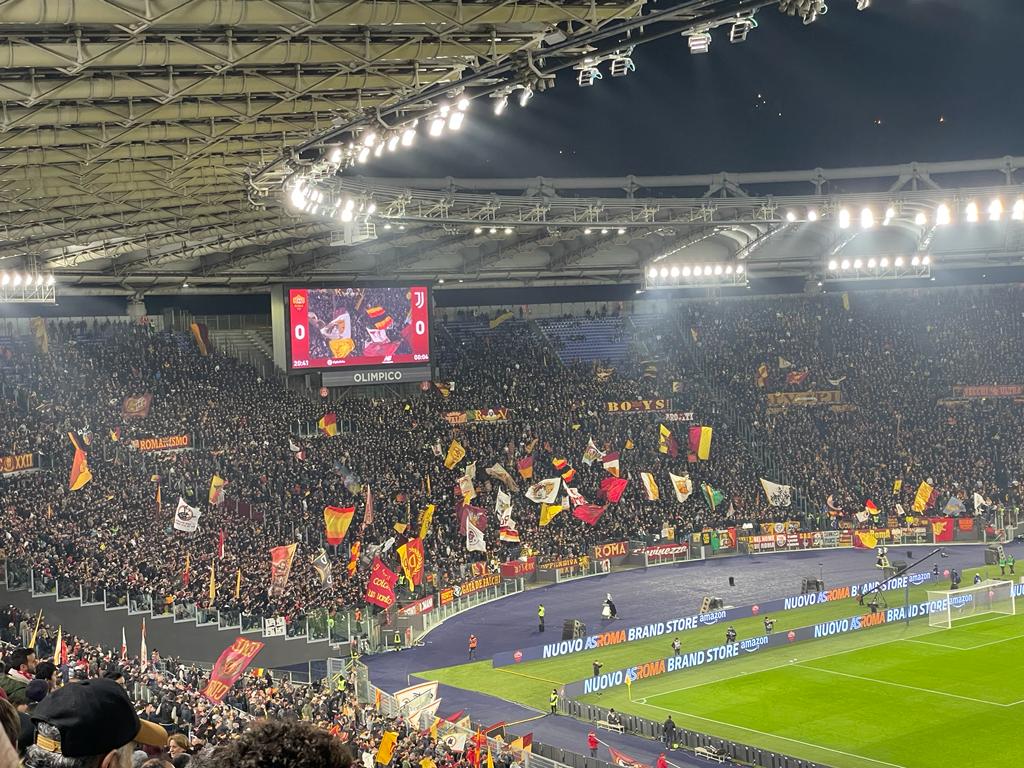
Inside the stadium, that importance becomes visible in choreography, banners, chants, and collective timing. Outside it, the culture travels through WhatsApp threads, local bars, family rituals, and the Monday retelling of what just happened. Juventus does not need every supporter to agree on the same meaning. It only needs enough people to keep carrying the conversation forward. That part, at least, has never looked fragile.
Social responsibility and the club’s wider footprint
No major club can now be judged by sport alone, and Juventus is no exception. The size of the fan base means the club’s behavior off the pitch matters in schools, charities, local communities, and public campaigns. That does not mean every initiative changes the world. It means a club of this scale has social weight whether it intends to or not.
In practical terms, Juventus’ wider footprint shows up in youth outreach, charity fundraising, inclusion work, and the use of football as a community language that crosses age and background. Some of that work is highly visible, some of it quieter, but the larger principle is consistent: an institution followed across Italy cannot act as if its only audience is the next matchday crowd.
There is a useful tradeoff to keep in mind here. Supporters want authenticity, not polished slogans. Social responsibility matters most when it feels connected to the club’s real communities and not simply to public relations timing. Juventus has the scale to make those efforts visible, but visibility raises the standard. People expect substance when the badge is this large.
That expectation is healthy. It reminds supporters, media, and the club itself that football culture is about more than highlights. A club can shape how people gather, what they talk about, and how they imagine belonging. Once you accept that, social responsibility stops looking like a side project and starts looking like part of the job.
Why Juventus still shapes the Italian game
Juventus still matters because it keeps forcing Italian football to answer awkward, important questions. What should a super-club look like? How much of success comes from culture and how much from structure? Can a club recover its authority after scandal? How do you preserve tradition without becoming trapped by it? Juventus has spent decades living inside those questions.
That is why the club remains larger than a list of trophies. Its history includes beauty and pressure, continuity and rupture, admiration and resentment. It carries the memory of Boniperti, Scirea, Platini, Del Piero, Buffon, Chiellini, and many others, but it also carries the habits those figures helped normalize: high standards, national visibility, and the refusal to treat any era as final.
For a newcomer, the practical next step is not to memorize every title. It is to notice how often Juventus becomes the center of Italy’s football conversation, and then ask why. Usually the answer leads back to the same place: Juventus has become one of the main ways Italian football explains power, loyalty, ambition, and memory to itself.
Key takeaways
- Juventus became a national symbol because success, continuity, and media visibility carried the club well beyond Turin.
- Its cultural identity is built on more than trophies; symbols such as the black-and-white shirt, the curva, and the phrase fino alla fine help supporters experience the club as a tradition.
- Players such as Boniperti, Scirea, Del Piero, Buffon, Chiellini, and Platini turned Juventus from a team into a story that each generation can inherit.
- Memorable matches matter because they shape public memory, especially when Juventus faces Inter, competes in Europe, or passes through moments of institutional change.
- The club’s wider footprint matters too, because a fan base this large makes Juventus part of Italian social and cultural life, not just its league table.
Juventus is easiest to understand when you stop treating it as a single season’s problem and start reading it as a long-running national conversation. That conversation can be noisy, emotional, and occasionally exhausting. It can also be the reason the club remains so compelling.